If you’ve played Unsolved Crimes for DS, then Crime Scene will instantly feel familiar. So familiar, in fact, that at first I thought they were developed by the same team. Basically, you play as a rookie investigator and must use your evidence collecting and analytical skills to help solve various cases from murders to terrorist attacks.
The gameplay is a point-and-click at heart, but the spin here is a huge focus on evidence-based mini games, for lack of a better term. In other words, you must dust for fingerprints, swab for blood and compare ballistics information to identify what gun shot which bullet, and so on. Although some of these games can be a little silly (you use a laser to destroy unwanted cells in your microscope, for example), overall the entire process is engaging and fun. That is, when the controls work.
And as Hamlet says, “Aye, there’s the rub,” The first major problem Crime Scene has is the fact that there really isn’t a tutorial level to get you used to the controls. For example, the menu system isn’t completely intuitive, and you may find yourself fumbling a bit. But that could be forgiven. The real issue is that you aren’t given any chance to practice with the various evidence collection mini games before you’re thrust into the real world, so to speak. You’re shoved into the deep end and you have to figure things out as you go along. This would be fine, except for the fact that you are penalized very severely every time you get something wrong. This is made worse by the fact that the only instructions you’re given for the various steps of say, taking a blood swab, are given during the timed interval when you’re supposed to be doing those steps. Meaning 1) you can’t possibly read all the instructions in the given time and 2) you will “fail” because you’re spending time trying to see what you have to do in order to succeed. Add to the fact that the controls aren’t as responsive as they could be and you may find yourself with a Game Over before you’ve even begun (I know I did). Certainly, this is not the most encouraging way to introduce the player to the game.
Once you’ve managed to figure out what you need to do, you would think that things would move more smoothly. Sadly, this isn’t true. Try as you may, the game won’t always read your stylus gestures correctly, so you will often find yourself failing the swab test, for example, because you “aren’t swabbing in the right area” even when you’ve been rubbing your stylus right over the blood spot. Each time you make a mistake, you lose credibility (a blue thermometer-like meter). When it drops all the way, your game is over, and you have to start over from your last save. Thankfully, the game does auto save at key points, but you still want to make sure you save often, otherwise you’ll have to re-do a lot of (what then becomes) tedious data collection and analysis, not to mention tons of dialogue to weed through (there’s no “skip” option).
By far the most vicious offender is the tweezers, which command you to follow a certain path with your stylus a certain number of times in order successfully pick up the item. The problem is, these gestures are only recognized about 10% of the time, and if the game thinks you’ve picked up your stylus, you drop the tweezers and have to start again. Add to the fact that you might have to repeat the same pattern 9 or 10 times before the meter expires, and you’ll often find yourself ready to throw your DS across the room and give up. No, I’ve decided the scalpel is actually worse since whenever you try to use it to cut something, following the prompt, it either tells you the area can’t be cut or for some reason takes the scalpel away from you and you have to start over in a never ending cycle.
Magnifying the problem is the control design: rather than sticking to a primarily stylus-only control system, you have to use the L and/or R buttons while using your stylus to perform various maneuvers. In principle, this seems fine, but in practice, it’s awful. It’s very uncomfortable to hold the DS that way, especially for long-stretches and for extended periods. I know my hands were really hurting after only the first case.
When everything is working smoothly, however, the game is enjoyable. It’s an interesting take on the genre, especially since the mini-games don’t feel tacked on the way they did in Unsolved Crimes, and it’s exciting to see the pieces of the puzzle reveal themselves. You really do feel like you’re the one solving the case, instead of being lead through it step by step the way you are in many other games of this nature. I also like that you will occasionally find dead ends such as clues that you can’t identify in the database, or clues that end up being a false lead, which force you to rethink the situation. You’ll also often have to revisit the scenes to look at things in a new light and discover new clues that may help crack the case. I also liked that you must build your case in order to apply for a warrant by selecting the best evidence to include in your file. This was just another way the game made you feel like you were really the one solving this case rather than just hanging along for the ride.
Crime Scene does have other flaws, but these seem minor in comparison to the huge control issue. For example, the translation isn’t always the best (I believe this was a Spanish-language game originally), and sometimes you might struggle to figure out how the game wants you to respond. Also, you aren’t able to fully explore the scenes the way you can in other games of this genre, and you can only zoom in to look at something more closely when the game allows you to. Still, these are negligible and don’t harm the gameplay in the same way that the unforgiving controls do.
The pattern of the gameplay is basically as such: you’ll be briefed on a case, comb the scenes, collect evidence, analyze the evidence, and then build your case. You’ll often have to revisit the scene and may get new suspects to interview, but that is generally the way the game goes. Your evidence collection tools are basically a swab for blood and other fluids, a duster and tape for fingerprints and footprints, a scalpel, as well as a reagent spray and UV light to discover hidden blood and fluids, plus tweezers to collect small evidence or bullets. Back at the station, you analyze this info using a scanner, camera, microscope and computer database. So you may scan in the fingerprint you collected at the scene and then compare it to the various fingerprints in the system to try and find a match. Many of the tests do mimic real life evidence analysis and this is where the game is truly in its element, especially since the analysis tools work much better than the collection ones do, control-wise.
The sad thing about Crime Scene is it may have earned as high as a 7/10 if the controls weren’t so brutally unforgiving. I honestly don’t know how the game got past testing, as broken as the controls can be most times. And the reality is the fix could have been as simple as removing the “fail” state from the data collection process and making it so you only lose credibility for misinterpreting the evidence. As it is, however, I can’t recommend this game, because the controls really do break it. You will undoubtedly find sections that you cannot get past because the game will not read your tweezer’s movements, or unfairly think you’re rubbing the swab in the wrong area. Save yourself the aggravation and look elsewhere for your CSI needs.
|
|
| Title: Crime Scene |
| Publisher: SouthPeak Games |
| Developer: White Birds Production |
| Platform(s): Nintendo DS |
| Release Date: February 16, 2026 |
|
| Doin It RIGHT:
- CSI aspect is different and can be great fun when controls are working well.
- The game makes you feel like you’re truly the one in control of the investigation. |
Doin It RONG:
- Penalties for failing (often due to poor controls) are severe, even in your first case.
- Frustrating controls make the game unplayable too much of the time. |

FINAL SCORE: 4 / 10
 |


 Earlier this year, Spawn Kill gave away a few posters that may have featured the most effed up image in gaming history. It was a proud moment for us, and I’m sure Southpeak Games’ art department found similar pride when designing the layout. At PAX East this year, I was given the chance to sit down with the actual game behind the poster, and while it did not stir within me such ghastly images as its forerunning images, I still found what little I played to be interesting and creepy as hell.
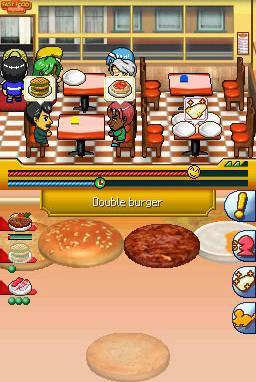
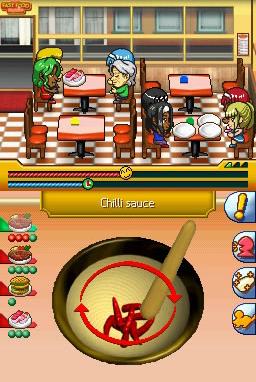
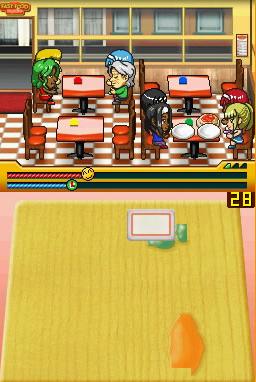
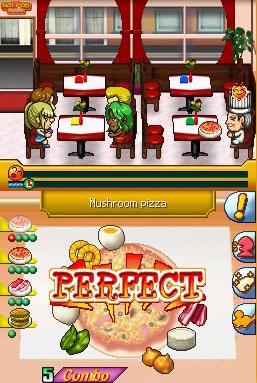
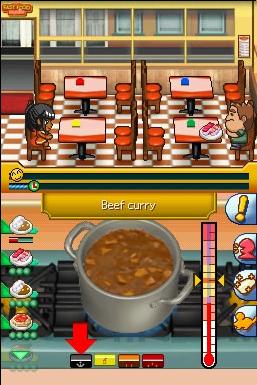
 The wait is over, and that which you are hungering for has arrived (on DS at least): Fast Food Panic is now available for Nintendo’s handheld, with the Wii version to follow on January 19.










 Loading ...