Seven Awful Game Mechanics
Posted by Kevin "K-Tuck" Tucker on September 14th, 2010
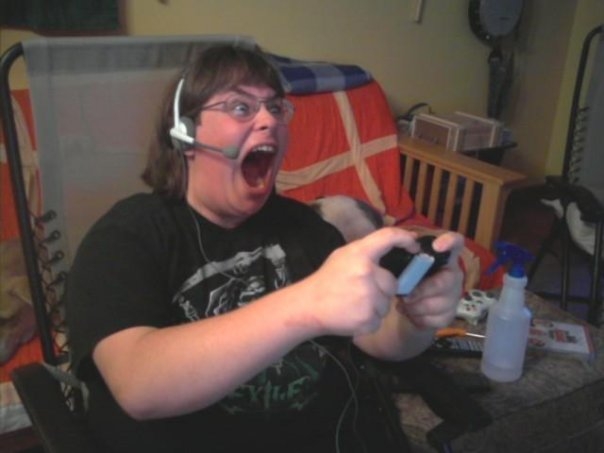
Gamers have come to recognize many different elements of video games as simple staples. We know we need to be able to save at some point. We know that being unable to heal our characters would make most games brutally challenging. We also, every now and then, want to find a bunch of hidden items. Still, the implementation of such nigh-necessities has actually become a bit of a problem. When games are so ultra-realistic that we are truly meant to be lost within them, stumbling upon a giant glowing save point can be an almost jarring experience. Listed below are seven frustrating game mechanics that ought to be refined or removed.
Save Points
Be it a passive auto-save or a restore point created by the user, save points in games are absolute necessities. Restricting the act of saving to specific in-game areas not only breaks up a narrative by piercing the fourth wall, it frustrates the player by requiring a degree of backtracking after their inevitable death. This is not to mention that any number of distractions can strike upon a gamer at any time — for that reason, players ought to have the option to save whenever or wherever they need.
Countdowns
Most of the games that feature countdown timers are already relatively intense affairs. The player might be tasked with infiltrating a military compound, or escaping a near-impenetrable swarm of zombies, and all of the sudden a random timer appears signaling an inevitable doom for the character. Stressful.

Collectibles
I want to say that the very nature of a gamer is to collect anything and everything available within a particular title. That in itself wouldn’t be too much of a problem if certain games didn’t make it a point to have fifteen different kinds of collectibles, with the rarer ones leading to the game’s best spells or weapons, or worse, tying into the best trophies or achievements.
Quick time events
Cutscenes have almost always been for plot progression; this is something almost hardwired into gamers’ minds. Now, players have to be on edge, or risk being taken off-guard by the inevitable randomly-placed QTE that could spell death for their hero. Worse, now, is that QTEs can be placed into otherwise fast-paced bits of action, lending an unfortunate reliance on dumb luck.
Costly deaths
As if dying in a game isn’t bothersome enough (most titles require at least some degree of backtracking after death), many games actually take money, items, or even gained experience away from the player when he or she dies. Ouch.

Escort missions
Players usually have their hands full trying to keep the protagonist from being brutally killed. There’s absolutely no reason why they should be forced to protect someone who can’t even avoid being hit by a weapon, let alone hold one.
Healing items
Although healing items have been a staple of video games for a long time, I’d be hard-pressed to find a less-realistic game mechanic. Being riddled with bullets or beaten by an enormous monster would put even the most muscular bad boy in a hospital bed, but in video games all the hero needs to do is eat some leaves, drink a potion, or inject himself with a dubious syringe.


Tags: frustrating, game mechanics, sucks bad, Top Ten




 Loading ...